A Restorative Approach in Colombia’s Total Peace Negotiations

Embedding Relational Restorative Justice in Columbia’s Total Peace Negotiations
By Kerry Clamp, University of Nottingham and Jennifer Llewellyn, Dalhousie University
 
Click Here to View the Full Report [English]

Click Here to View the Full Report [en español] 

This Think Piece, a collaboration between the Restorative Lab at Dalhousie University and University of Notingham,  argues that Colombia’s Total Peace policy represents a pivotal opportunity to embed relational restorative justice as the guiding framework for building a sustainable and inclusive peace. Drawing on ongoing negotiations between the Colombian government and Comuneros del Sur in Nariño, it shows how justice can be reimagined not as a discrete phase of post-conflict repair but as the relational architecture that connects and sustains the entire peace process. By centering relationships, participation, and contextual responsiveness, relational restorative justice transforms peacebuilding from a technical exercise into a process of co-construction rooted in dignity, trust, and shared responsibility. The paper identifies seven relational dimensions already emerging in practice and proposes six strategic recommendations for embedding them more intentionally in negotiation design and implementation. It concludes that when justice is enacted relationally, peace becomes not a settlement to be reached but a living process of transformation through which people, communities, and institutions rebuild together.

Relational Restorative Justice in Action: Building the conditions for just peace in Columbia
By Jennifer Llewellyn, Dalhousie University and Kerry Clamp, University of Nottingham
Click Here to View the Full Report [English]

Click Here to View the Full Report [en español]

This Think Piece explores how relational restorative justice is being enacted through Colombia’s ongoing peace process, with a focus on the Comuneros del Sur negotiations in Nariño. It builds on the foundational argument that justice must be lived and practiced within peace processes, not deferred until conflict ends. Drawing on the workshop held in Pasto in September 2025, it examines how justice is already being co-created through inclusive participation, shared responsibility, and local leadership. It considers the role of law not as the source of justice, but as an enabler of relational conditions, and outlines key orientations for policy, practice, and institutional design. The piece closes with a clear message: the compass for just peace exists. The question is whether Colombia will choose to follow it.


2024 Public Lecture Series

We are pleased to announce the 2024 Associates and Fellows Public Seminar Series featuring Erika Sasson and Jacob Glover

Click here for Registration


NRCLC 2022 Final Report

Final Report from National Restorative Justice Collaborative Learning Conference (NRCLC)


The National Collaborative Learning Conference 2022 was held October 2022 in Halifax, NS. The NRCLC engaged delegations from provinces, territories and the Federal level in a collaborative process to identify key elements and commitments required to advance and realize the potential of restorative justice to transform the approach to justice in Canada.

The convenors and facilitators of the 2022 NRCLC prepared this report, which provides background and an overview of the 2022 conference and shares insights, ideas and recommendations that emerged from the NRCLC. 


Public Lecture Series 2023: Allison Kooijman

HEALING AND LEARNING AFTER HARM IN THE HEALTHCARE SYSTEM: THE POTENTIAL OF A RESTORATIVE APPROACH

Delivered on March 13, 2022 by Allison Kooijman.

Ali is a PhD Student in the School of Nursing at UBC Okanagan where she studies the contributions that a Restorative Approach stands to make in the healthcare context. Ali experienced harm as a patient which ended her career as a Licensed Practical Nurse. This experience, both as a former healthcare provider and patient, provides her with a unique lens that she brings to this space. Ali believes that transformation and reimagining of our healthcare system requires a collaborative effort and identifying a principled approach to serve as a foundation for doing so. Ali lives on the lands of the Syilx peoples in beautiful Coldstream, British Columbia

Read more of Ali’s work: https://www.researchgate.net/profile/Allison-Kooijman

Follow Ali on twitter: https://twitter.com/AllisonKooijma1


Transformative Journeys Evening Program

TRANSFORMATIVE JOURNEYS FOR RACIAL JUSTICE:
AN EVENING IN CONVERSATION WITH ANGELA DAVIS, FANIA DAVIS AND MARGARET BURNHAM

Wednesday, October 26 at 7:00 pm
Doors open at 6:30pm
Spatz Theatre, 1855 Trollope Street
Halifax, Nova Scotia, B3H 0A4

MASKS ARE MANDATORY

This special event brings together three remarkable leaders who are beacons for racial justice in the US and around the world. Their advocacy and work for justice transformation has shaped a generation and seeded a vision of a better future. Their journeys for racial justice began together in Birmingham, Alabama, and continued to be interwoven through the height of the civil rights movement. Their relationship and connected experiences have rooted each panelist’s unique work for racial justice shared commitment to transformation through restorative justice.

Evening Program

Drumming performed by Drummers from Home

Welcome

Blessing provided by Elder Geri Musqua-Leblanc

Introduction by Emcee, Lindsay Ruck

Conversation with Panelists

Q & A (video) 

Books written by Panelists and Emcee are available for purchase in the foyer before and after the event. 

Panelists

Angela Davis has been deeply involved in movements for social justice around the world. Her work as an educator – both at the university level and in the larger public sphere – has always emphasized the importance of building communities of struggle for economic, racial, and gender justice. She is the author of eleven books, including Abolition.Feminism.Now, co-authored with Gina Dent, Erica Meiners, and Beth Richie, and a new edition of her Autobiography. Having helped to popularize the notion of a “prison industrial complex,” she now urges her audiences to think seriously about the future possibility of a world without carceral systems and to help forge a 21st century abolitionist movement.

Fania Davis is a leading international voice on the intersections of racial and restorative justice. She is a long-time social justice activist, civil rights trial attorney, author, and educator with a PhD in Indigenous Knowledge. Davis came of age in Birmingham, Alabama during the social ferment of the civil rights era. These formative years, particularlly the murder of two close childhood friends in the 1963 Sunday School bombing, crystallized within Fania an enduring commitment to social transformation. For the next decades, she was active in the Civil Rights, Black liberation, women’s, prisoners’, peace, anti-racial violence, economic justice and anti-apartheid movements. Apprenticing with African indigenous healers catalyzed Fania’s search for a healing justice, ultimately leading her to serve as Founding Director of Restorative Justice for Oakland Youth and Co-Founding Board Member of the National Association of Community and Restorative Justice. Her numerous honors include the Lifetime Achievement award for excellence in Restorative Justice, the Black Feminist Shapeshifters and Waymakers’ award, the Tikkun (Repair the World) award, the Ella Jo Baker Human Rights award, and the Ebony POWER 100 award. The Los Angeles Times named her a New Civil Rights Leader of the 21st Century. She recently received the Open Society Foundations Justice Rising Award recognizing 16 Black movement leaders working towards racial justice in the United States. Among Davis’ publications is the Little Book of Race and Restorative Justice: Black Lives, Justice, and U.S. Social Transformation. 
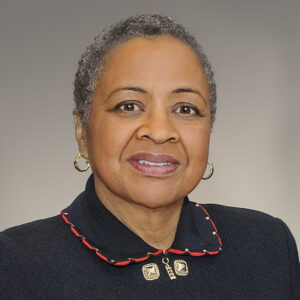
Margaret Burnham is University Distinguished Professor at Northeastern University. Trained in law, Professor Burnham teaches, writes and practices in the field of historical injustice. She began her career in civil rights law at the NAACP Legal Defense Fund. From 1970 to 1972 she represented Angela Davis, a life-long friend, in the California criminal prosecution. She was appointed to the bench in Massachusetts by Governor Michael Dukakis. She was designated to investigate human rights violations charged against the African National Congress by President Nelson Mandela. Professor Burnham is founder and director of Northeastern University’s Civil Rights & Restorative Justice Project (CRRJ), a teaching, research and legal services program. CRRJ published the Nation’s leading online archive, the Burnham-Nobles Digital Archive, on anti-Black killings during the Jim Crow era. Burnham’s book, By Hands Now Known: Jim Crow’s Legal Executioners, Norton Press has won wide acclaim.

Master of Ceremonies 

Lindsay Ruck is a mother, author, and Coordinator of Africentric Learning and Resource Management with the Delmore “Buddy” Daye Learning Institute in Halifax. Lindsay lived in Ottawa for over a decade and studied journalism at Carleton University’s School of Journalism before returning home to Nova Scotia to continue her writing career. Lindsay hopes to educate, celebrate, and inspire through the art of storytelling. Her first book, Winds of Change: The Life and Legacy of Calvin W. Ruck, was a biography of her grandfather, and was nominated for a Dartmouth Book Award. She had the honour of acting as guest editor for a special issue of Understorey Magazine, which featured a talented group of African Nova Scotian female writers and artists. Her most recent book, Amazing Black Atlantic Canadians: Inspiring Stories of Courage & Achievement, is shortlisted for the 2022/2023 Hackmatack Children’s Choice Book Awards. 


Narrators

Kai Butterfield, OCT, MT is pursuing their PhD in the Social Justice Education department at the Ontario Institute for Studies in Education. Their work as a research assistant on the Digital Oral Histories for Reconciliation project (DOHR) informs their interest in the critical examination of restorative justice and its role in education. Kai’s current research focuses on the ways that restorative justice has been co-opted by the Ontario education system and weaponized against Black and Indigenous students. They contend that there is an immediate need to address settler colonialism, white supremacy, and carcerality as structural issues that drive the appropriation and misuse of restorative justice in education.

Jake MacIsaac is Assistant Director, Security Services at Dalhousie University where he focuses on promoting restorative approaches within campus security and with other campus stakeholders. Previously, Jake worked at Nova Scotia’s largest restorative justice agency, overseeing case work staff and managing 700+ youth justice referrals from police, the prosecution service and the courts annually. Jake was part of a three-person facilitation team overseeing the restorative justice process at Dalhousie’s Faculty of Dentistry in 2015 addressing climate and culture within the faculty.

Panel Moderator

Jennifer Llewellyn is a Fellow of the Royal Society of Canada, and the Chair in Restorative Justice (with funding support from the Donald R. Sobey Foundation) at the Schulich School of Law at Dalhousie University. She previously held the Yogis and Keddy Chair in Human Rights Law and the Viscount Bennett Professorship in Law, at the Schulich School of Law.

Q & Α VIDEOS

Eni Oguntona of the Indigenous Blacks and Mi’kmaw Initiative at the Schulich School of Law

Patricia Whyte of the Elizabeth Fry Society of Mainland Nova Scotia

Megan Rahme of the Criminal Justice Coalition at the Schulich School of Law

Randolph Riley of the East Coast Prison Justice Society 

Tony Smith and Gerry Morrison of VOICES (Victims of Institutional Child Exploitation Society)

Collaborating Parnters

The Restorative Lab is proud to host this event in partnership with the Elizabeth Fry Society of Mainland Nova Scotia, the Black Cultural Centre of Nova Scotia, the Indigenous Blacks and Mi’kmaw Initiative at the Schulich School of Law, VOICES (Victims of Institutional Child Exploitation Society), and the Criminal Justice Coalition – Schulich School of Law. 

Event Sponsors


Dalhousie University Schulich School Of Law logo


National Restorative Collaborative Learning Conference 2022

Conference Details

The National Restorative Collaborative Learning Conference (NRCLC) is an opportunity to bring jurisdictions and sectors together nationally to reflect and learn together about the potential of restorative justice to serve as a mechanism for justice transformation. The conference will be held at the Hotel Halifax located in the heart of the downtown at 1990 Barrington Street, Halifax, NS B3J 1P2. The conference will run each day from 8:30 AM to 5:00 PM with breakfast, lunch and two nutrition breaks provided. Given that this conference will be an integrated working meeting, delegates are expected to participate in the full conference program each day.

Conference Presentations


Key Background Documents

The NRCLC is designed for delegates to build on the work of the initial NRCLC held in 2018 and the Key Elements of Success Document (click to access) that resulted and was endorsed by the FPT Ministers Responsible for Justice and Public Safety. This NRCLC will focus on considering, revising and renewing these key elements and related commitments with a specific focus on how restorative justice can support justice transformation. 

The FPT Working Group on Restorative Justice developed a list of principles and values in 2018 that stood alongside the Key Elements of Success and were intended to help inform restorative programs and practices connected to the criminal justice system. You are encouraged to review these principles in advance of the meeting. They can be found at Principles and Guidelines for Restorative Justice Practice in Criminal Matters (click to access).

Introduction Video

Pour nos collègues francophones et francophiles, nous n’avons pu créer une version en français de la vidéo. Nous avons donc fait traduire le contenu de la vidéo, qui est maintenant à votre disposition. Cliquez ici pour access au document

Video PowerPoint Slides ENG (click to access the PowerPoint in PDF)

Conference Agenda

This will be an integrated working style conference with much of the time spent in small group discussions within jurisdictions, amongst sector groups and in mixed groups. Please click below for the full conference agenda:                                    

Agenda – English Version 

Version française du programme                                      

What we know: The Use of Restorative Justice to Address Criminal Offending in Canada

Department of Justice of Canada’s Description of Restorative Justice in Canada

What We Know

Jurisdictional Reflection Documents

These documents have been prepared by each jurisdiction to provide a summary of the work being done and progress on the key elements of success since 2018. We will be drawing on the content of these documents as the basis for conference discussions. Please ensure you have read and reviewed these documents.

Alberta Reflection Document ENG | Alberta Reflection document de réflexion FR

British Columbia Reflection Document ENG | British Columbia document de réflexion FR

Manitoba Reflection Document ENG | Manitoba document de réflexion FR

New Brunswick Reflection Document ENG | Nouvelle Brunswick document de réflexion FR

Newfoundland Reflection Document ENG | Terre-Neuve document de reflection de réflexion FR

Northwest Territories Reflection Document ENG | Territoires du Nord-Ouest document de réflexion FR

Nova Scotia Reflection Document ENG | Nouvelle-Écosse document de réflexion FR

Nunavut Reflection Document ENG | Nunavut document de réflexion FR

Ontario Reflection Document ENG | Ontario document de réflexion FR

Prince Edward Island Reflection Document ENG | l’Île-du-Prince-Édouard document de réflexion FR

Québec Reflection Document ENG | Québec document de réflexion FR

Québec Annex* EN | Annexe Québec* FR

Saskatchewan Reflection Document ENG | Saskatchewan document de réflexion FR

Yukon Reflection Document ENG | Yukon document de réflexion FR

Federal Reflection Document ENG | Federale document de réflexion FR

*This annex is not part of the reflection question process but was provided as additional information.


Book: Restorative and Responsive Human Services

In Restorative and Responsive Human Services, Gale Burford, John Braithwaite, and Valerie Braithwaite bring together a distinguished collection providing rich lessons on how regulation in human services can proceed in empowering ways that heal and are respectful of human relationships and legal obligations.


Toward A Culture of Just Relationships | Gale Burford

Gale Burford, an Emeritus Professor at the University of Vermont, speaks at the International Restorative Conference in Halifax, Nova Scotia, Canada on June 27, 2016.


Toward A Culture of Just Relationships | Danny Graham

Danny Graham, Chief Engagement Officer for Engage Nova Scotia,  speaking at the International Restorative Conference in Halifax, Nova Scotia, Canada on June 27, 2016.


Toward A Culture of Just Relationships | Chief Judge Pamela S. Williams

Chief Judge Pamela S. Williams, appointed a judge of the Provincial and Family Courts of Nova Scotia in September 2003, speaks at the International Restorative Conference in Halifax, Nova Scotia, Canada on June 27, 2016.